

TL;DR:
- About 5-10% of fleet vehicles may be offline at any time due to maintenance or rebalancing.
- Rental fleet management involves scheduling, maintenance, demand forecasting, and vehicle lifecycle tracking.
- Knowing fleet limitations helps renters choose the right vehicle, time bookings, and avoid availability issues.
When you browse a rental catalogue and assume every vehicle listed is ready and waiting, you may be in for a surprise. 5-10% of fleet vehicles may be offline at any given time due to maintenance, rebalancing, or seasonal changes. For anyone hiring a vehicle in Northamptonshire, whether you are a local resident, a business traveller, or a family planning a holiday trip, understanding how rental fleets actually work gives you a real advantage. This guide walks you through what a rental fleet is, how it is managed, and how to use that knowledge to hire smarter and avoid common frustrations.
Table of Contents
- What is a rental fleet?
- How rental fleets are managed: Operations, utilisation and challenges
- Fleet mix and optimisation: Choosing the right vehicle for your needs
- Edge cases and real-world challenges for Northamptonshire renters
- The uncomfortable truth about rental fleets: What most guides never say
- Find your ideal rental fleet with Sackeycars
- Frequently asked questions
Key Takeaways
| Point | Details |
|---|---|
| Rental fleet definition | A rental fleet is a group of vehicles managed for hire, offering flexibility and choice. |
| Management challenges | Fleet operators must balance availability, maintenance, and seasonal demand, with up to 10% of vehicles offline at times. |
| Optimising your hire | Assess your needs to match fleet options, vehicle size, and features for the best rental experience. |
| Edge cases matter | Prepare for seasonal surges and maintenance periods by booking early and checking vehicle status. |
What is a rental fleet?
A rental fleet is a collection of vehicles owned or leased by a hire company and made available to customers for short or long-term use. Unlike borrowing a single car from a friend or using a private vehicle, a fleet is a managed asset. The company tracks every vehicle, schedules maintenance, monitors usage, and adjusts availability based on demand.
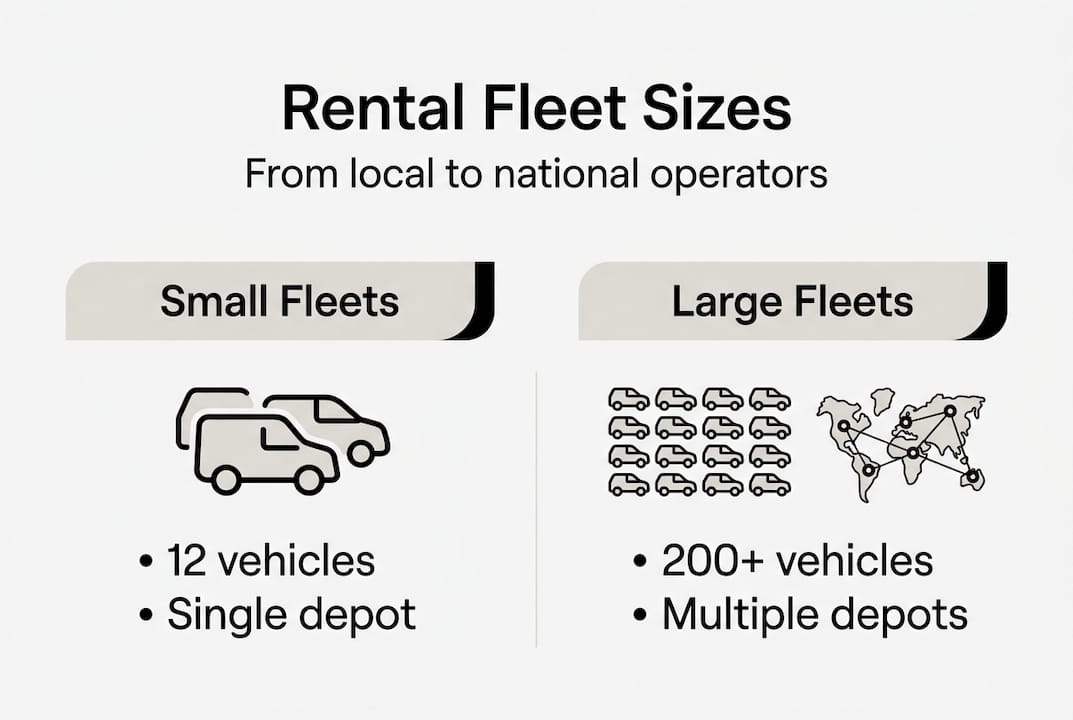
Fleets vary enormously in size and composition. A small local operator in Rushden might manage a dozen vehicles, while a national provider could oversee thousands. What matters most to you as a renter is not the total number of vehicles but the mix and availability at your chosen location. As fleet management specialists note, vehicle mix, availability, and utilisation all require active management to keep operations running smoothly.
Understanding the difference between fleet hire and a single-vehicle arrangement also helps when reading your rental agreement guide. Fleet-based agreements often include substitution clauses, meaning the provider can swap your booked vehicle for a comparable one if needed.
Common vehicle types found in rental fleets:
- Small and medium cars (ideal for solo travellers and couples)
- SUVs and crossovers (suited to families and longer journeys)
- Vans and light commercial vehicles (popular for moving and tradespeople)
- Luxury and executive cars (for business trips and special occasions)
- Electric vehicles, or EVs (growing in availability across Northamptonshire)
- HGVs and larger commercial vehicles (for specialist business needs)
Fleet hire vs. single vehicle rental: a quick comparison
| Feature | Fleet hire | Single vehicle rental |
|---|---|---|
| Vehicle variety | High | Limited |
| Substitution possible | Yes | Rarely |
| Managed maintenance | Yes | Varies |
| Pricing flexibility | Often tiered | Fixed |
| Availability risk | Moderate | Low |
Both individuals and businesses use fleet hire for different reasons. A family might want the flexibility of choosing between a saloon and an SUV at short notice. A business might need reliable access to multiple vehicles across different days. Consulting a rental location guide before you book helps you understand what is realistically available near you. The right car rental provider will be transparent about fleet composition from the outset.
How rental fleets are managed: Operations, utilisation and challenges
Managing a rental fleet is far more involved than simply parking vehicles and handing over keys. Operators use scheduling software, telematics, and demand forecasting to keep vehicles moving efficiently. Every vehicle has a lifecycle: it is acquired, deployed, maintained, and eventually retired or sold.
Fleet utilisation averaged 80.9% across the industry, with seasonal demand and key maintenance periods creating notable dips and spikes. That figure means roughly one in five vehicles may be unavailable at any given moment, which is a significant operational reality for renters to understand.
Key operational factors that affect your rental:
- Scheduled maintenance: Vehicles are pulled from service for servicing, tyre changes, and safety checks.
- Rebalancing: After one-way hires, vehicles may be at the wrong location and need repositioning.
- Seasonal surges: Summer holidays and Christmas periods create sharp demand spikes.
- Damage repairs: Even minor incidents take vehicles offline for days or weeks.
- Regulatory compliance: MOTs, insurance renewals, and emissions checks must be kept current.
Utilisation snapshot by vehicle type (indicative figures)
| Vehicle type | Typical utilisation rate | Peak demand period |
|---|---|---|
| Small cars | 85-90% | Summer, bank holidays |
| SUVs | 80-85% | Summer, winter breaks |
| Vans | 75-80% | Year-round, spring peak |
| EVs | 65-75% | Growing steadily |
| HGVs | 70-80% | Varies by sector |
For renters thinking about airport car rental benefits, it is worth knowing that airport-adjacent fleets often have higher utilisation rates, meaning early booking is even more important. If you are interested in eco-friendly rental options, be aware that EV availability can be tighter due to charging turnaround times.
Pro Tip: Before confirming any booking, ask the provider directly whether your specific vehicle category is currently in stock at your chosen location. A quick phone call or message can save you a wasted journey or an unwanted upgrade.
For those focused on saving with rental cars, understanding utilisation rates can help you time your booking for off-peak periods when more vehicles are available and prices tend to be lower. Exploring rental company alternatives in the region also gives you a fallback if your first choice is fully booked.
Fleet mix and optimisation: Choosing the right vehicle for your needs
Fleet mix refers to the combination of vehicle types a rental company holds at any one time. A well-optimised fleet balances popular everyday cars with specialist vehicles, ensuring renters are not left without options regardless of their purpose.

Fleet mix optimisation is key for meeting diverse traveller needs and adjusting to market shifts. For you as a renter, this translates directly into whether the vehicle you need is actually available when you need it.
Matching your needs to the right vehicle:
- Leisure travel: A compact car or mid-size SUV works well for day trips around Northamptonshire.
- Family holidays: A seven-seater or large estate gives you space for luggage and passengers.
- Business travel: An executive saloon or hybrid offers comfort and a professional impression.
- Moving home or office: A van or light commercial vehicle handles bulky loads efficiently.
- Special occasions: A luxury or exotic car adds a memorable touch to weddings and anniversaries.
- Long-distance touring: A fuel-efficient diesel or hybrid reduces running costs on extended trips.
Think carefully about rental duration as well as vehicle type. A day hire might suit a quick business meeting, but a weekly rental often works out significantly cheaper per day and gives you more flexibility.
Pro Tip: If you are hiring for a specific purpose such as a family trip or a business rental, tell the provider your exact requirements upfront. A good fleet operator will match you to the most suitable vehicle rather than simply the next available one.
For tourists visiting Northamptonshire, fleet mix matters because local roads vary from narrow country lanes to dual carriageways. A smaller, more manoeuvrable vehicle often suits rural exploration better than a large SUV, even if the SUV feels more appealing on paper. Local knowledge from your rental provider can be genuinely useful here.
Edge cases and real-world challenges for Northamptonshire renters
Even with a well-managed fleet, unexpected situations arise. Knowing about them in advance helps you plan around them rather than being caught off guard.
"Seasonal demand, one-way rentals needing rebalancing, EV charging infrastructure, and overbooking risks are key operational hurdles for fleet operators."
Here are the most common edge cases and how to handle them:
- Seasonal demand spikes. School holidays, bank holidays, and local events in Northamptonshire such as Silverstone race weekends can drain fleet availability overnight. Book at least two to three weeks in advance during these periods.
- Overbooking. Some providers accept more reservations than they have vehicles, banking on cancellations. Always confirm your booking the day before and get written confirmation.
- EV charging delays. Electric vehicles need time to recharge between hires. If you book an EV, ask the provider to confirm it will be fully charged at collection. Charging infrastructure across Northamptonshire is improving but is not yet uniform.
- Maintenance downtime. If your booked vehicle is unexpectedly in for repair, a reputable provider will offer a comparable substitute. Check the substitution policy in your rental duration guide before signing.
- One-way hire rebalancing. If you drop a vehicle at a different location, it may not be available for the next renter at that spot for some time. This can affect availability at popular drop-off points.
Pro Tip: If you are hiring during a peak period, consider collecting your vehicle a day earlier or returning it a day later than strictly necessary. This small adjustment often puts you outside the busiest windows and reduces the risk of last-minute changes.
Understanding these challenges does not mean you should expect problems. Most hires in Northamptonshire go smoothly. It simply means you are prepared if something unusual occurs.
The uncomfortable truth about rental fleets: What most guides never say
Here is something the industry rarely advertises openly: a bigger fleet does not automatically mean better choice or more reliable availability for you. Large fleets can mask inefficiencies. Vehicles that sit underused create hidden costs for operators, and those costs eventually filter through to pricing or service cuts.
The first six weeks are critical for new HGV setup, and underused vehicles in any category can create hidden costs that operators quietly absorb or pass on. We have seen renters assume that a company with 200 vehicles is automatically more reliable than one with 30. That is not always true. A focused, well-maintained smaller fleet often delivers a more consistent experience.
Our honest advice: ask questions before you book. Ask how many vehicles of your required type are currently available. Ask what the substitution policy is. Ask whether the specific model you see advertised is the one you will actually receive. These are not awkward questions. They are reasonable ones, and any reputable provider will answer them directly.
The weekly rental perspective is worth considering here too. Longer hire periods give operators more certainty and often result in better vehicle allocation for you. If your plans allow flexibility, a weekly hire can mean you get exactly the vehicle you want rather than whatever happens to be available on the day.
Fleet rental is genuinely excellent when you approach it with clear expectations and the right questions ready.
Find your ideal rental fleet with Sackeycars
Now that you understand how rental fleets work, choosing the right vehicle for your Northamptonshire journey becomes much simpler. At Sackeycars, based in Rushden, we maintain a diverse fleet designed to meet the needs of local residents, business travellers, families, and visitors alike.
Whether you need a compact car for a day trip, a van for a house move, or a luxury vehicle for a special occasion, we are ready to match you with the right option. We believe in transparency about availability, clear rental agreements, and vehicles that are properly maintained and ready to go. Explore Sackeycars fleets today and find the vehicle that fits your plans, your budget, and your timeline.
Frequently asked questions
How many vehicles are typically in a rental fleet?
Fleet sizes range from a handful to hundreds of vehicles, depending on the provider, location, and season. What matters more than size is the mix of vehicle types and how well availability is managed at your chosen location.
Why are some rental fleet vehicles unavailable at certain times?
Vehicles are often offline due to maintenance, rebalancing after one-way hires, or seasonal demand fluctuations. 5-10% of fleet vehicles may be unavailable at any given time, which is why confirming availability directly before booking is always a good idea.
How can I avoid overbooking or unavailability in Northamptonshire?
Book early during peak seasons, confirm your reservation the day before collection, and ask about specific vehicle availability directly. Overbooking peaks during high-demand periods, so written confirmation and direct communication with your provider are your best protections.
Are electric vehicles (EVs) common in rental fleets around Northamptonshire?
EVs are increasingly found in local fleets, but charging infrastructure challenges and vehicle turnaround times can affect availability. Always confirm charging status and range before collecting an EV for a longer journey.