

Choosing between short term and long term car rentals often leaves individuals and families feeling uncertain about which option truly fits their circumstances. Many assume short term means expensive and long term means commitment, but the reality involves nuanced differences in cost, flexibility, and practical benefits. Understanding these distinctions empowers you to select the rental duration that aligns with your travel plans, budget constraints, and lifestyle requirements. This guide clarifies the key differences, compares costs and benefits, and provides actionable steps to help you make the best choice for your Northamptonshire transport needs.
Table of Contents
- Key Takeaways
- Understanding short term and long term car rentals
- Comparing costs, benefits, and drawbacks
- Practical considerations for individuals and families in Northamptonshire
- How to make the best choice for your rental needs
- Find the perfect car rental with Sackeycars
- Frequently asked questions
Key Takeaways
| Point | Details |
|---|---|
| Flexibility of short term | Short term rentals offer immediate transport for temporary needs with minimal paperwork and no ongoing obligations. |
| Long term cost benefits | Long term rentals reduce daily rates when billed monthly, delivering substantial savings for extended use. |
| Contractual differences | Short term agreements typically feature simple bookings and upfront charges while long term contracts involve detailed terms and monthly billing. |
| Pricing by duration | Short term daily rates usually range from £40 to £100 and long term monthly rates effectively amount to about £25 to £60 per day. |
Understanding short term and long term car rentals
Short term rentals serve immediate, temporary transport needs with maximum flexibility. Short term rentals typically last from a single day to a few weeks, suited for temporary needs such as holidays or events, making them ideal when you need a vehicle without ongoing obligations. Families visiting Northamptonshire for a weekend celebration, tourists exploring the region, or individuals whose personal vehicle requires unexpected repairs commonly choose this option. The appeal lies in simplicity: collect the car, use it for your specific purpose, return it, and walk away without further responsibility.
Long term rentals cater to extended transport requirements spanning months rather than days. These arrangements typically begin at one month and can extend to a year or beyond, providing consistent vehicle access for those facing prolonged needs. Business professionals on extended assignments, families awaiting delivery of a purchased vehicle, or individuals testing a car model before buying often favour this approach. The commitment brings financial advantages through reduced daily rates and bundled services.
Key differences between rental durations include:
- Booking process complexity: short term requires minimal paperwork; long term involves detailed contracts
- Payment structure: short term charges upfront; long term often uses monthly billing
- Vehicle selection: short term offers immediate availability from current fleet; long term may allow specific model requests
- Cancellation policies: short term provides easier modification; long term penalties can be substantial
Common misconceptions blur these distinctions and lead to poor choices. Many believe short term always costs more overall, yet for genuinely brief needs, the total expenditure remains lower than committing to a month. Others assume long term locks you into a specific vehicle, when reputable providers like those serving car rental durations often permit vehicle swaps. Understanding these realities helps you evaluate options based on actual terms rather than assumptions, ensuring your choice genuinely serves your transport requirements rather than creating unnecessary expense or restriction.
Comparing costs, benefits, and drawbacks
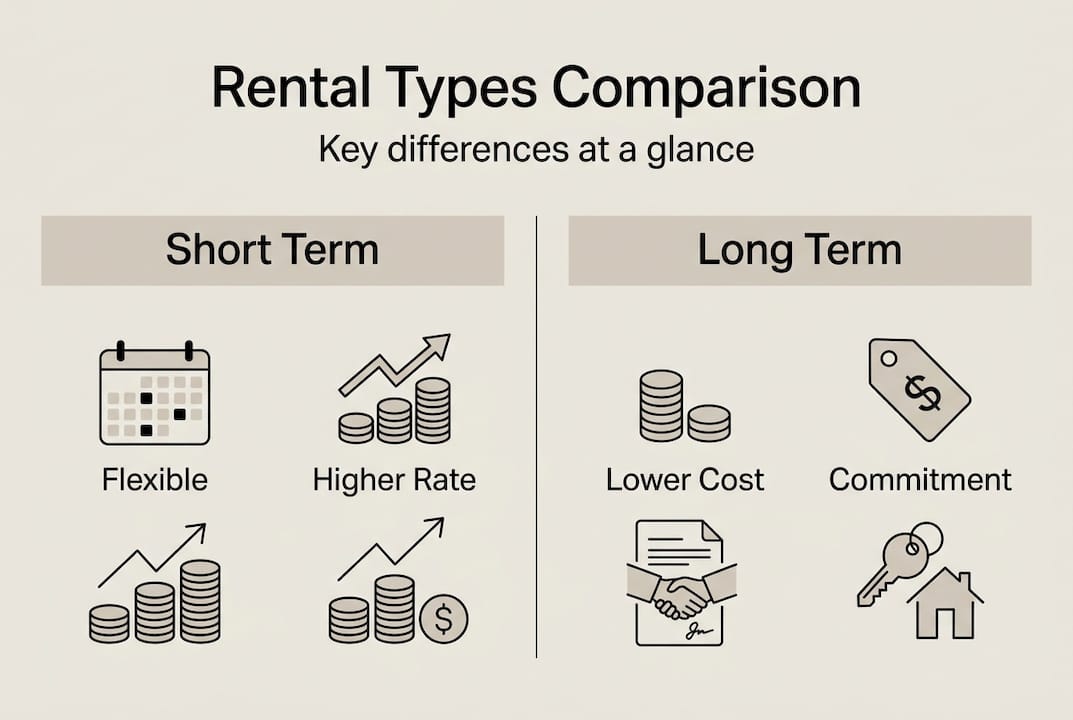
Cost structures differ dramatically between rental durations, impacting your total expenditure and value received. Short term rentals charge higher daily rates, typically ranging from £40 to £100 per day depending on vehicle class and season, because providers must cover administrative costs, cleaning, and vehicle turnover for each rental. A week's rental might total £280 to £700, which seems expensive until you consider the flexibility gained. Long term arrangements reduce daily costs significantly, often dropping to £25 to £60 per day when calculated monthly, because the provider enjoys consistent revenue and reduced turnover expenses. A month at these rates costs £750 to £1,800, representing substantial savings for extended needs.
| Cost factor | Short term | Long term |
|---|---|---|
| Daily rate | £40 to £100 | £25 to £60 (monthly average) |
| Insurance | Separate daily charge | Often bundled |
| Mileage limits | Generous or unlimited | May have monthly caps |
| Maintenance | Included | Included |
| Early return | Minimal penalty | Significant penalty possible |
| Booking flexibility | Change easily | Commitment required |
Short term rentals deliver unmatched flexibility for temporary situations. You select precisely the days you need transport, choose a vehicle matching your specific trip requirements, and return it without ongoing obligations. This suits holidays where you only need a car for part of your stay, special events requiring larger vehicles temporarily, or situations where your regular transport faces brief unavailability. The absence of commitment means you adapt plans freely, extend or shorten rental periods with minimal hassle, and avoid paying for days you don't need the vehicle.
Long term rentals often reduce daily rates but may require commitment and differ in insurance coverage, creating cost efficiency for sustained needs. Monthly arrangements provide consistent vehicle access without daily rental stress, bundled services that simplify budgeting, and the security of knowing transport remains available throughout your commitment period. Business travellers appreciate the predictability, families managing temporary situations value the stability, and individuals testing vehicle ownership find the extended access invaluable.
Drawbacks exist for both options and merit consideration:
- Short term rentals accumulate expensive daily costs quickly, making them impractical for needs exceeding a month
- Peak season availability becomes limited for short term bookings, requiring advance planning
- Long term commitments reduce flexibility, penalising early termination or changes
- Monthly mileage caps in long term contracts can restrict usage for high mileage drivers
- Insurance terms vary significantly, requiring careful review of coverage levels and excess amounts
Pro Tip: Always review car rental pricing insurance terms and maintenance responsibilities before signing any rental agreement, regardless of duration. Short term policies may carry higher excess amounts, whilst long term contracts might exclude certain damage types. Understanding these details prevents unexpected costs and ensures adequate protection throughout your rental period.
Practical considerations for individuals and families in Northamptonshire
Northamptonshire families and individuals rent vehicles for diverse reasons that shape their duration needs. Holiday travel represents the most common scenario, with families requiring larger vehicles for week or fortnight trips to coastal destinations or countryside retreats. Special events like weddings, milestone celebrations, or sporting occasions create temporary transport demands lasting a weekend to several days. Temporary transport needs arise when personal vehicles require extended repairs, household circumstances change, or additional capacity becomes necessary for specific projects or movements.

Rental duration directly impacts vehicle selection and booking strategy. Short term rentals allow you to match vehicle size precisely to each trip, choosing a compact car for solo business travel but requesting a seven seater for family holidays. Long term arrangements require selecting a vehicle that serves your predominant needs throughout the commitment period, potentially compromising on occasional requirements. Booking timing matters more for short term rentals during peak seasons, whilst long term agreements offer more negotiation flexibility regarding vehicle specification and contract terms.
Five step decision checklist for choosing rental type:
- Calculate exact days you need vehicle access, adding buffer for unexpected extensions or delays
- Assess your budget constraints, comparing total costs for short term daily rates versus long term monthly commitments
- Evaluate flexibility requirements, considering how likely plans might change or extend beyond initial estimates
- Review family size and luggage needs, ensuring selected vehicle comfortably accommodates passengers and belongings
- Check seasonal factors, recognising that summer holidays and Christmas periods affect both availability and pricing
Pro Tip: Book early during peak seasons in Northamptonshire for best availability and rates. Summer months from June through August see increased demand from tourists and families, whilst December experiences holiday travel surges. Securing your rental four to six weeks ahead ensures access to preferred vehicle types and often locks in lower rates before seasonal price increases take effect.
Car rental companies in Northamptonshire manage fleets to support a range of durations, ensuring availability for both short and long term clients through strategic inventory planning. Local providers understand regional demand patterns, maintaining diverse vehicle selections that accommodate family requirements, business needs, and special occasion requests. This fleet management approach benefits customers by providing consistent access to well maintained vehicles, reducing the risk of booking disappointments, and enabling providers to offer competitive pricing through efficient resource utilisation. The proximity of local providers to Northamptonshire rentals also facilitates convenient collection and return, reducing travel time and simplifying the rental process for regional customers.
How to make the best choice for your rental needs
Evaluating your specific circumstances requires systematic assessment of multiple factors that influence rental suitability. Following structured steps prevents overlooking critical considerations and ensures your choice genuinely serves your requirements rather than creating unforeseen complications or expenses.
Five steps to evaluate trip and budget needs:
- Document your precise travel dates, including arrival and departure times, to calculate exact rental days required
- List all passengers and luggage requirements, determining minimum vehicle size and features needed for comfort
- Estimate total mileage for your intended use, checking whether rental agreements impose distance restrictions
- Calculate your available budget, including rental costs, fuel, insurance, and potential additional driver fees
- Consider contingency scenarios, asking what happens if plans change, extend, or require early termination
Assessing rental terms and insurance demands careful attention to contract details that significantly impact your experience and costs. Standard rental agreements specify the rental period, daily or monthly rate, included mileage allowance, fuel policy, and insurance coverage level. Reading these terms thoroughly reveals potential additional charges for extra drivers, young driver surcharges, cross border travel restrictions, and late return penalties. Insurance typically comes in tiers, from basic third party coverage to comprehensive policies with reduced excess amounts, and understanding what each level protects against helps you select appropriate coverage without overpaying for unnecessary protection.
Vehicle type, mileage limits, and maintenance considerations shape your rental experience substantially. Selecting a vehicle class that genuinely matches your needs prevents paying premium rates for features you won't use whilst ensuring adequate space and capability for your intended activities. Mileage limits matter particularly for long term rentals, where monthly caps might restrict your driving freedom or incur expensive overage charges. Maintenance responsibilities typically rest with the rental provider, but understanding what constitutes normal wear versus damage for which you're liable protects you from disputed charges upon return.
Common pitfalls to avoid:
- Underestimating rental duration and facing expensive daily extension charges
- Ignoring insurance excess amounts that leave you liable for substantial costs in minor incidents
- Overlooking fuel policies that require returning the vehicle with a full tank or incur refuelling fees
- Failing to document existing vehicle damage during collection, risking blame for pre existing issues
- Assuming all providers offer identical terms without comparing specific contract details
- Neglecting to check cancellation policies before booking, limiting your flexibility if circumstances change
Choosing the right rental duration can optimise cost efficiency and convenience for your particular travel circumstances by aligning rental terms with your genuine needs rather than defaulting to assumptions about which option suits best. The decision requires honest assessment of how long you need the vehicle, what flexibility you require, and which cost structure delivers better value for your specific situation. Short term rentals excel for defined, temporary needs where flexibility and simplicity matter most. Long term arrangements reward extended requirements with lower daily costs and consistent availability, provided you can commit to the duration and accept reduced flexibility.
Contacting rental companies directly for customised advice often reveals options not advertised online and allows you to negotiate terms that better fit unusual circumstances. Providers at choosing a car rental can explain current promotions, suggest alternative rental structures that might save money, and clarify policy details that seem ambiguous in written terms. This personal interaction also establishes a relationship that can prove valuable if you need assistance during your rental period or face unexpected situations requiring flexibility from the provider.
Find the perfect car rental with Sackeycars
After understanding how rental durations impact costs, flexibility, and practical considerations, securing the right vehicle becomes straightforward with the right provider. Sackeycars offers comprehensive rental solutions for both short term and long term needs throughout Northamptonshire, maintaining a diverse fleet that accommodates families, individuals, and business travellers with varying requirements. Whether you need a compact car for a weekend trip or a spacious vehicle for an extended stay, the range ensures you find appropriate transport without compromise.

The booking process emphasises convenience and transparency, with clear pricing, flexible collection arrangements, and expert guidance to help you select the optimal rental duration for your circumstances. Local expertise means understanding Northamptonshire travel patterns, seasonal demand, and regional requirements that influence your rental experience. Competitive rates across both short term and long term options ensure you receive genuine value regardless of your chosen duration, whilst responsive customer service addresses questions and accommodates special requests that make your rental smoother. Explore available vehicles and rental options at Sackeycars car rental services to begin planning your next journey with confidence and convenience.
Frequently asked questions
What is the difference between short term and long term car rentals?
Short term rentals span from a single day to several weeks, designed for temporary needs like holidays, events, or brief transport gaps. Long term rentals typically start at one month and extend for several months or longer, suited for sustained requirements such as extended business assignments or awaiting vehicle delivery. The fundamental difference lies in commitment level and cost structure, with short term offering flexibility at higher daily rates and long term providing cost efficiency through reduced daily charges.
Which rental option is more cost effective for families?
Long term rentals deliver better value for extended family needs, reducing daily costs by 30% to 50% compared to short term rates when calculated over weeks or months. However, for genuinely brief requirements like a week's holiday, short term proves more economical despite higher daily charges because you only pay for days actually needed. Families should calculate total costs for their specific duration rather than assuming one option always costs less, considering that a two week short term rental often costs less overall than committing to a month long arrangement.
Can I switch from a short term to a long term rental easily?
Many rental providers allow conversions from short term to long term arrangements, though terms and conditions vary significantly between companies. Some apply your initial short term payments toward a long term contract, whilst others require starting a fresh agreement with associated fees. The ease of switching depends on vehicle availability, current demand, and the provider's policies regarding contract modifications. Always check conversion terms before your initial rental begins, particularly if you suspect your needs might extend beyond your original booking.
Are insurance and maintenance different between rental durations?
Insurance structures differ notably between rental durations, with short term policies typically charging separate daily fees and offering tiered coverage options from basic to comprehensive. Long term arrangements often bundle insurance into monthly rates, potentially including higher coverage levels as standard to protect the provider's extended exposure. Maintenance responsibilities remain with the provider regardless of duration, but long term contracts may specify your obligations regarding routine checks, reporting issues promptly, and maintaining the vehicle in reasonable condition throughout the extended rental period.