

Many travellers assume car rental is complicated or expensive, but it's actually one of the most flexible transport solutions available. Whether you're visiting Northamptonshire for business, planning a special event, or need temporary wheels whilst your own vehicle is serviced, understanding how car rental works can save you time, money, and stress. This guide clarifies the basics of car rental, walks you through the booking process, explains pricing variations, and shares expert tips to help you navigate the system confidently and avoid common pitfalls.
Table of Contents
- Key Takeaways
- What is car rental and how does it work?
- How to rent a car: booking, requirements, and vehicle inspection
- Choosing the right car rental in Northamptonshire: options and pricing
- Common pitfalls and expert tips for a smooth car rental experience
- Find your ideal car rental in Northamptonshire with SackeyCars
- Frequently asked questions about car rental
Key Takeaways
| Point | Details |
|---|---|
| Short term hire | Car rental is a flexible short term vehicle hire suitable for a range of trips. |
| Booking essentials | A valid licence, suitable age, and a credit card are typically required to reserve and collect a vehicle. |
| Price variations | Pricing depends on location, duration, vehicle type, demand and optional extras. |
| Inspect before departure | Always inspect the car for damage before departure and ensure fuel and cleanliness levels meet the agreement. |
| Vehicle options | Fleets range from economy to luxury with add ons to tailor your hire. |
What is car rental and how does it work?
Car rental is short-term vehicle hiring, typically from hours to weeks, for personal, business, or event use. Companies handle fleet acquisition, maintenance, dynamic pricing, reservations, and remarketing. Unlike traditional ownership, you pay only for the time you need the vehicle, making it ideal for trips, temporary transport, or trying different car types before purchasing.
Rental companies acquire vehicles directly from manufacturers, maintain them on strict schedules, and eventually resell them. This cycle keeps fleets modern and reliable. The industry operates on utilisation rates, aiming for 65 to 70 per cent or higher to remain profitable whilst keeping enough inventory to meet demand spikes.
Typical rental durations suit various needs. Hourly rentals work for quick errands or appointments. Daily rentals serve travellers arriving by train or plane. Weekly and monthly options benefit those needing extended transport for business assignments, home relocations, or vehicle repairs. Some companies offer long-term leases spanning several months, bridging the gap between traditional rental and ownership.
Car rental serves three main purposes:
- Personal travel when your own vehicle is unavailable or unsuitable for a specific journey
- Business transport for corporate trips, client meetings, or temporary staff assignments
- Special events like weddings, anniversaries, or celebrations requiring luxury or specific vehicle types
Companies maintain diverse fleets to match customer needs. Economy cars suit budget-conscious travellers. SUVs accommodate families or groups with luggage. Luxury vehicles elevate special occasions. This variety ensures you can find appropriate vehicle acquisition and maintenance options regardless of your requirements or budget.
The rental process involves reservation systems that track vehicle availability, pricing algorithms that adjust rates based on demand, and logistics networks coordinating pick-up and return locations. Behind the scenes, companies manage insurance, roadside assistance, cleaning, refuelling, and damage assessment to keep operations running smoothly.
How to rent a car: booking, requirements, and vehicle inspection
Renting a car requires three essentials: a valid driving licence, suitable age (usually 21 or older), and a credit card. Booking methods include online or in-person options, with careful vehicle inspection before departure to document existing damage. You'll need to return the car clean and with the agreed fuel level, and can add extras like insurance waivers, though these generate additional profit for rental companies.
Start by choosing your car rental reservation process method. Online booking lets you compare prices, read reviews, and secure vehicles in advance. In-person rental at the counter offers flexibility but may cost more and risk limited availability during peak periods. Many companies allow you to reserve online and complete paperwork upon arrival, combining convenience with personal service.
Age requirements vary by company and location. Most require renters to be at least 21, though some set the minimum at 25. Drivers under 25 typically pay young driver surcharges, sometimes adding £15 to £30 per day. These fees reflect higher insurance costs and accident statistics for younger drivers. Senior drivers may face upper age limits or additional documentation requirements at certain companies.
Before driving away, inspect the vehicle thoroughly. Walk around the entire car examining bodywork, windows, lights, and tyres. Open the boot and check interior condition. Document everything with your phone, taking photos and videos that include number plates and timestamps. Note even minor scratches, dents, or chips on the rental agreement. This evidence protects you from false damage claims that can appear weeks or months later.

Pro tip: Record a video whilst walking around the vehicle with the rental agent present, narrating what you see. This creates undeniable proof of the car's condition at pick-up and has saved countless renters from unfair charges.
Check essential equipment before leaving the lot. Verify spare tyre presence and condition, ensure the jack and tools are included, and test lights, indicators, and wipers. Confirm you understand the fuel policy, whether full-to-full, pre-purchase, or another arrangement. Familiarise yourself with dashboard controls, especially if renting an unfamiliar vehicle type.
Return requirements matter as much as pick-up procedures. Most companies expect the car back with the same fuel level as when you collected it. Some charge premium rates for refuelling, sometimes double the local petrol station price. Clean the interior of rubbish and personal items. Excessive dirt may trigger cleaning fees, though normal road dust from regular use shouldn't.
Insurance options can confuse first-time renters. Basic coverage usually comes included, but companies offer collision damage waivers, theft protection, and liability upgrades. Before purchasing extras, check whether your personal car insurance or credit card provides rental coverage. Many premium credit cards include comprehensive rental insurance when you use them to pay, potentially saving £10 to £25 per day.
Choosing the right car rental in Northamptonshire: options and pricing
The UK car rental market is growing from £1.74 billion in 2024 to a projected £2.91 billion by 2032, with average daily rates around £38 to £50 and weekly rentals offering up to 50 per cent discounts. Understanding vehicle types, pricing structures, and location differences helps you select the best option for your Northamptonshire trip.
Car categories range from economy to luxury, each serving different needs and budgets:
| Vehicle type | Best for | Typical daily rate | Passenger capacity |
|---|---|---|---|
| Economy | Solo travellers, budget trips | £25 to £40 | 4 to 5 |
| Compact | Couples, city driving | £30 to £45 | 4 to 5 |
| SUV | Families, countryside exploration | £50 to £75 | 5 to 7 |
| Luxury | Special events, business | £80 to £150+ | 4 to 5 |
| Van | Group travel, equipment transport | £60 to £90 | 8 to 12 |
Economy cars deliver the lowest rates and best fuel efficiency, ideal for solo business travellers or couples exploring Northamptonshire's market towns. Compact vehicles offer slightly more space whilst maintaining affordability. SUVs suit families visiting attractions like Brixworth Country Park or Wicksteed Park, providing boot space for luggage and comfortable seating for longer journeys.
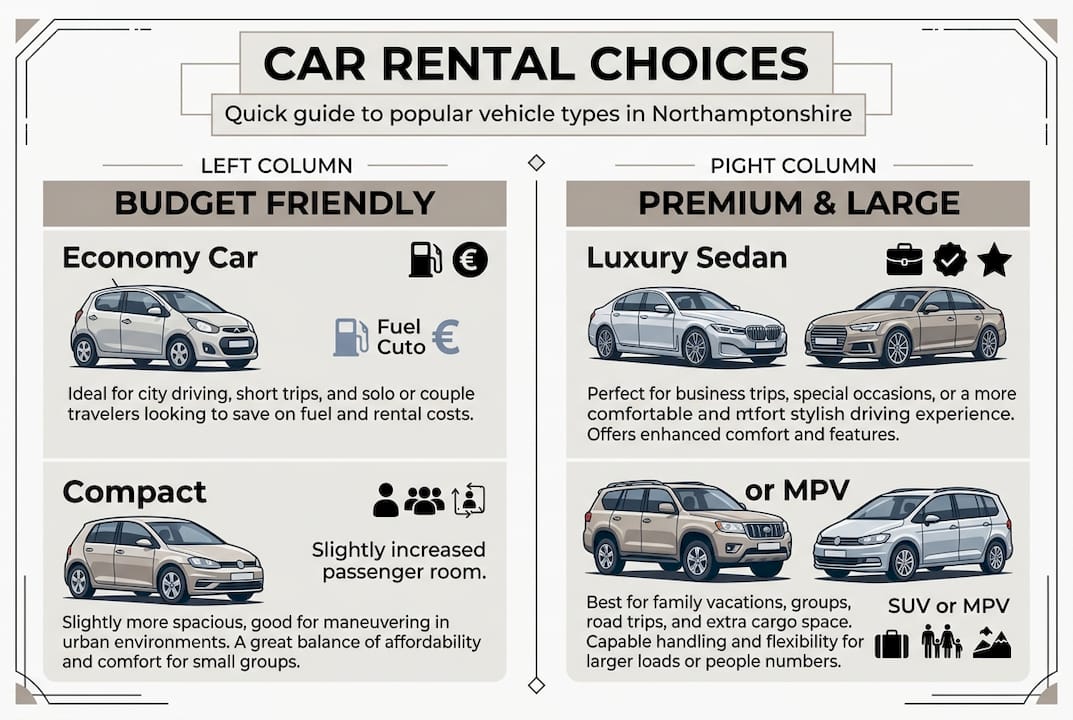
Luxury vehicles elevate weddings, anniversaries, and corporate events. Premium brands like Mercedes, BMW, or Audi make impressions at business meetings or special celebrations. Some Northamptonshire companies specialise in exotic cars for unique occasions, though these command premium prices reflecting their higher acquisition and maintenance costs.
Rental duration dramatically affects pricing. Weekly rentals offer approximately 50 per cent discounts compared to daily rates. A car costing £45 per day might rent for £150 per week, saving you £165. Monthly rates provide even better value for extended needs like temporary work assignments or vehicle repairs lasting several weeks.
Location influences costs significantly. Airport rentals charge convenience premiums, adding facility fees, concession costs, and taxes that can increase total bills by 10 to 30 per cent. Off-airport locations in Rushden or other Northamptonshire towns typically offer better car rental fleet options at lower prices. You'll save money by taking a short taxi ride to a town centre location instead of renting directly at an airport.
Pro tip: Book directly with local Northamptonshire rental companies rather than international chains when possible. Local businesses often provide more personalised service, flexible policies, and competitive rates without corporate overhead costs.
Business travellers may access corporate rates through negotiated contracts between employers and rental companies. These agreements offer discounted pricing, streamlined billing, and preferred service. Personal renters should compare prices across multiple companies, checking for promotions, loyalty programmes, or membership discounts through organisations like AA or RAE.
Seasonal demand affects availability and pricing. Summer months and school holidays see higher rates and limited inventory as families travel. Booking several weeks ahead secures better prices and vehicle selection. Last-minute weekend rentals during events or festivals may face premium pricing due to high demand and low availability.
Consider add-ons carefully. GPS navigation costs £8 to £15 per day, though your smartphone often provides the same function free. Child seats run £5 to £10 daily, worthwhile for safety but expensive for week-long rentals when purchasing might cost less. Additional driver fees typically add £5 to £15 per day, though some companies waive this for spouses.
Common pitfalls and expert tips for a smooth car rental experience
Understanding frequent challenges helps you avoid costly mistakes. Pre-existing damage claims affect 60 per cent of renters unfairly, with ghost claims appearing months later. Common coverage exclusions include tyres, glass, and underbody damage, whilst overbooking can leave you without a vehicle despite confirmed reservations.
Pre-existing damage disputes represent the most common rental nightmare. Companies sometimes charge renters for scratches, dents, or chips that existed before pick-up. Without photographic evidence, you're vulnerable to claims appearing on your credit card weeks after return. Some unscrupulous operators deliberately fail to document existing damage, counting on renters not to notice or photograph it.
Protect yourself with thorough documentation:
- Photograph all four sides of the vehicle, the roof, and underneath if possible
- Capture close-ups of any existing damage, however minor
- Include the number plate and rental agreement in some photos
- Take interior shots showing seat condition, dashboard, and boot
- Record timestamps by including your phone's date and time in images
Insurance coverage contains important exclusions many renters discover too late. Tyre damage from punctures or sidewall cuts typically isn't covered. Windscreen and window damage may require separate glass coverage. Underbody damage from scraping speed bumps or rough roads often falls outside standard policies. These exclusions can leave you facing repair bills of hundreds of pounds.
"Always photograph the vehicle from every angle before driving away, including underneath if possible. I've seen renters charged for damage they didn't cause simply because they lacked proof of the car's condition at pick-up. Your phone camera is your best defence against unfair claims."
Overbooking happens when companies accept more reservations than available vehicles, gambling that some customers will cancel or return cars early. If everyone shows up and no returns occur, you might arrive to find no car despite your confirmed booking. Legally, companies must provide alternatives, either from their fleet or a competitor, but this disrupts your plans and may result in a different vehicle category.
Loss of use fees surprise many renters involved in accidents. Beyond repair costs, companies charge daily rental rates for each day the damaged vehicle sits unusable. If repairs take two weeks and the car normally rents for £50 daily, you face £700 in loss of use charges plus actual repair costs. Some credit card insurance covers this; most basic rental coverage doesn't.
Expert strategies minimise risks and costs. Check whether your personal credit card provides rental car rental damage claims coverage before purchasing company insurance. Many premium cards include comprehensive protection when you decline the rental company's collision damage waiver and pay with that card. Read the card's terms carefully, as some exclude certain vehicle types or countries.
Verify fuel policies to avoid inflated refuelling charges. Full-to-full policies require you to return the car with a full tank, letting you refuel at normal petrol stations. Pre-purchase options charge upfront for a full tank, convenient but often more expensive than local prices. Some companies use quarter-tank increments, charging premium rates if you return with three-quarters instead of full.
Understand mileage limits if your rental includes them. Unlimited mileage suits long-distance travel, whilst capped allowances work for local use. Exceeding limits triggers per-mile charges, sometimes 25 to 50 pence per mile, quickly adding substantial costs. Calculate your expected distance before booking to choose appropriate terms.
Read the rental agreement completely before signing, even if staff rush you. Note the return time, as being even an hour late may trigger additional day charges. Confirm the return location if different from pick-up. Understand after-hours return procedures if you'll arrive outside business hours. These details prevent surprise fees and complications.
Find your ideal car rental in Northamptonshire with SackeyCars
Now that you understand how car rental works, finding reliable, affordable transport for your Northamptonshire trip becomes straightforward. SackeyCars provides a diverse, well-maintained fleet serving personal, business, and special event needs throughout the region. Whether you need an economical car for a weekend visit, a spacious SUV for family exploration, or a luxury vehicle for a memorable occasion, local expertise ensures you receive personalised service and competitive pricing.

Based in Rushden, SackeyCars offers convenient booking, transparent pricing, and thorough vehicle inspections that protect you from unfair damage claims. The company's commitment to customer satisfaction means flexible rental terms, from daily hires to long-term arrangements, all designed around your specific requirements. Visit SackeyCars car rental options to explore the fleet, compare prices, and reserve your vehicle today. Experience the difference that trusted local service makes when you need reliable transport in Northamptonshire.
Frequently asked questions about car rental
What is the minimum age to rent a car and are there extra fees?
Most rental companies require drivers to be at least 21 years old, though some set the minimum at 25. Renters under 25 typically pay young driver surcharges ranging from £15 to £30 per day, reflecting higher insurance costs associated with younger drivers.
What documents do I need to rent a car?
You'll need a valid driving licence held for at least one year, a credit card in the primary driver's name for the security deposit, and proof of identity such as a passport. Some companies accept debit cards but may require additional documentation or impose restrictions.
Are insurance waivers necessary and worth the cost?
Basic coverage usually comes included, but collision damage waivers and theft protection cost extra. Check your personal car insurance and credit card benefits first, as many premium cards provide comprehensive rental coverage when you use them to pay, potentially saving £10 to £25 per day.
How can I avoid charges for pre-existing vehicle damage?
Photograph the entire vehicle from all angles before driving away, including close-ups of any existing scratches, dents, or chips. Record video whilst walking around the car with timestamps, and ensure all damage appears on the rental agreement to protect yourself from false claims.
What are the main differences between airport and off-airport car rentals?
Airport rentals offer convenience, allowing immediate vehicle access upon arrival, but charge facility fees, concession costs, and taxes that increase total bills by 10 to 30 per cent. Off-airport locations in town centres typically provide lower rates and more personalised service, though you'll need transport to reach them.
Can rental companies charge me if they overbook and have no cars available?
If a company overbooks and cannot provide your reserved vehicle, they must supply an alternative from their fleet or a competitor at no extra cost to you. This may result in a different vehicle category, and you can request an upgrade if only larger cars remain available.